What Runners Get Wrong About Race-Day Fueling
Most runners under-fuel, mistime their intake, or ignore carbohydrate type on race day. Research on 250-plus London Marathon runners and studies on pre-race timing and multiple transportable carbohydrates show how much performance is left on the table when fueling goes wrong.
Most runners have a race-day nutrition horror story. For some it is the wall at mile 20 of a marathon. For others it is a half marathon spent walking because they skipped breakfast. For Ashley Arnold, an ultrarunner and writer at Six Minute Mile, it was attempting to fuel a mountain marathon with a plastic bag of cheese cubes. She crawled across the finish line.
Arnold’s experience is extreme, but the underlying pattern is common. In a piece published last July, she surveyed the fueling mistakes she and other runners have made and collected practical advice from sports dietitians and exercise physiologists. Most runners under-fuel, mistime their intake, or ignore the type of carbohydrate they are consuming. The research shows how much performance this leaves on the table.
A 2011 study by Atkinson and colleagues, published in the International Journal of Sports Medicine, followed more than 250 runners at the London Marathon and found that those who consumed more than 7 grams of carbohydrate per kilogram of body weight the day before the race ran faster and more consistently than those who did not. The effect held after controlling for training volume. The day-before carb load mattered independently of how fit the runners were.
Hannah Lowe, an elite adventure racer and clinical exercise physiologist, recommends limiting the load to one or two days. “Longer pre-loading phases do not provide any extra benefit and can often simply cause gut discomfort or issues when training,” she told Six Minute Mile. For events longer than 90 minutes, she advises 3.5 to 4.5 grams of carbohydrate per kilogram from whole food sources such as sweet potatoes, rolled oats, bananas, quinoa, and rice, with an emphasis on lower-fiber options to reduce gastrointestinal risk on race morning.
What the research says about pre-race timing
The window immediately before the start also matters. A 2008 study in Applied Physiology, Nutrition, and Metabolism linked carbohydrate intake 15 minutes before an endurance event to a roughly 13 percent improvement in performance. Breakfast eaten two to three hours before the race has already begun clearing from the bloodstream. A small top-off, typically a gel or a carbohydrate-rich drink, restores blood glucose without triggering the reactive insulin drop that can impair fat oxidation.
Kylee Van Horn, a Colorado-based sports dietitian and author of Practical Fueling for Endurance Athletes, recommends pairing the pre-race snack with 500 to 1,000 milligrams of sodium to maintain electrolyte balance before the start. For runners whose race-day nerves suppress appetite, a liquid carbohydrate source, such as a sports drink or a thin smoothie, can substitute for solid food without the bloating that often accompanies forced eating.
During the race: how much and what kind
Once the race is underway, the body’s glycogen stores begin to deplete after roughly 60 to 90 minutes of sustained effort. The traditional guideline for marathoners is 60 to 90 grams of carbohydrate per hour, delivered in 20-to-30-minute intervals. Not all carbohydrates are absorbed through the same intestinal pathway.
The small intestine has separate transporters for glucose and fructose. Consuming both simultaneously, a strategy known as multiple transportable carbohydrate feeding, can increase total carbohydrate oxidation rates because each sugar uses a distinct absorption channel. Van Horn notes that varying carbohydrate type during exercise can reduce the likelihood of gastrointestinal distress at higher intake rates, though she cautions that some runners do not tolerate fructose and should test their chosen fuel in training before race day.
Stephanie Howe, a PhD in nutrition and exercise physiology and an elite trail runner, told Six Minute Mile that most runners need between 90 and 100 grams of carbohydrate per hour. “GI upset is a big risk with taking in too many carbs per hour. And, for distances like the half and full marathon, you just do not need to use that much.”
The ceiling is higher for ultra-distance events. A 2020 study in Nutrients compared 60, 90, and 120 grams of carbohydrate per hour during a trail marathon and found that the highest intake was associated with better recovery of neuromuscular function after the race. The authors noted the sample was small and the findings are specific to mountain ultras, not road marathons. Anecdotal reports of athletes tolerating more than 150 grams per hour exist, but these are outliers. The consensus among the dietitians Arnold interviewed is that most road marathoners are better served by a consistent 60-to-90-gram-per-hour strategy they have practiced for months in training.
Hydration and the post-race window
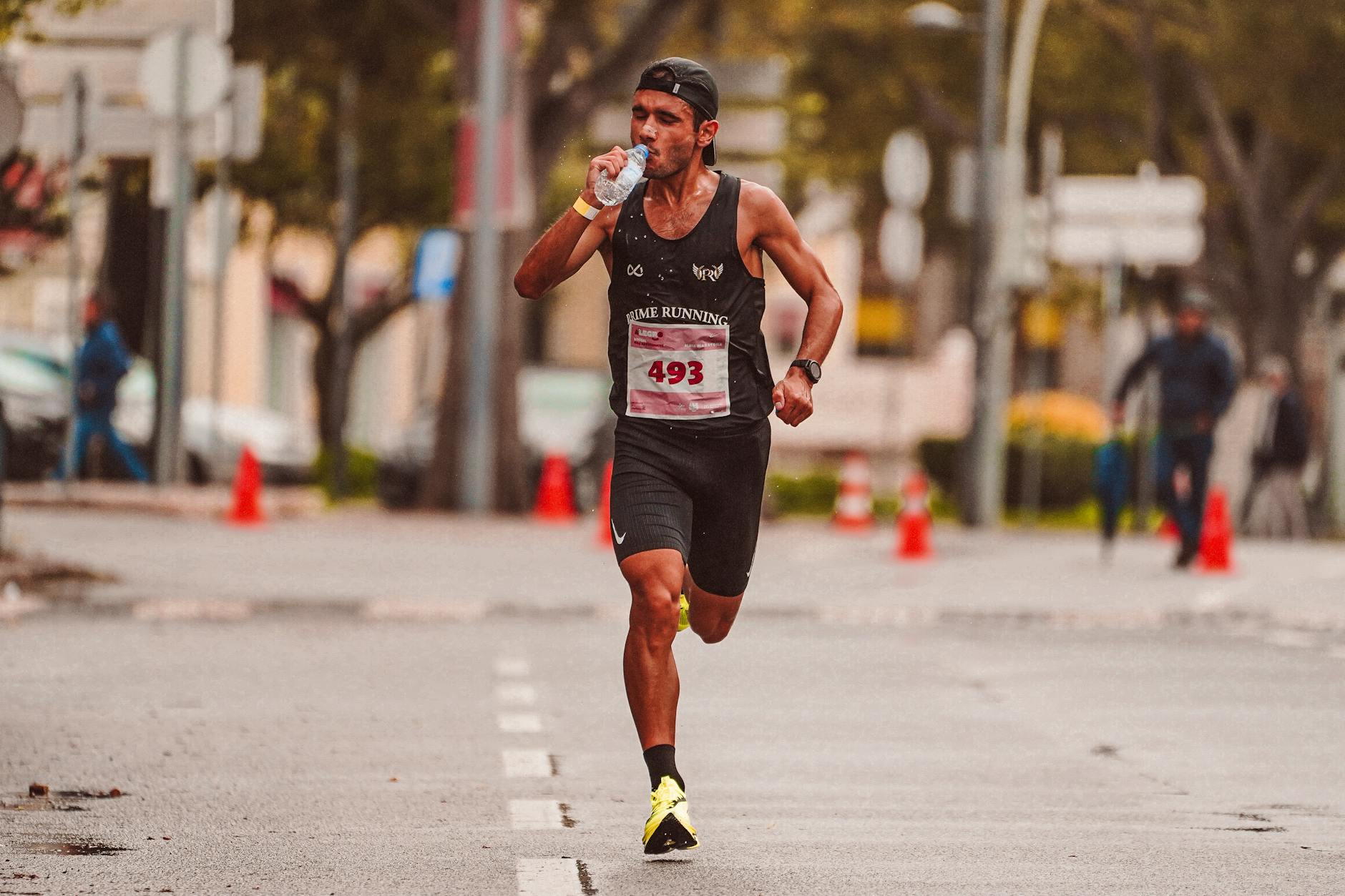
Hydration is harder to standardize than carbohydrate intake because sweat rate and sodium concentration vary widely between individuals. Van Horn recommends a sweat-loss test: weigh yourself unclothed before and after a 45-to-90-minute training run, without eating or drinking during the session, and calculate fluid loss per hour. The target replacement rate is 75 to 85 percent of losses, consumed in small, frequent sips rather than gulps. Lowe adds that drinking to thirst is a reasonable fallback for runners who have not done formal sweat testing, provided they have practiced their hydration strategy in training.
After the finish line, the priority is rehydration until urine runs pale yellow, followed by a balanced meal with carbohydrate, protein, and fat. The evidence does not support elaborate recovery protocols for road races. A normal meal eaten within two hours is sufficient for most runners.
Taken together, the research supports a few rules: carb-load the day before, eat breakfast, top off 15 minutes before the start, consume 60 to 90 grams of multiple-transportable carbohydrate per hour during the race, and drink to thirst. The execution is harder than the summary makes it sound. Every dietitian Arnold spoke to used the same final word: practice.
References
- Atkinson G, Taylor CE, Morgan N, et al. Pre-race dietary carbohydrate intake can independently influence sub-elite marathon running performance. International Journal of Sports Medicine 32(8):611-617. 2011. https://doi.org/10.1055/s-0031-1273739
- Chryssanthopoulos C, Williams C, Nowitz A, et al. Effects of carbohydrate ingestion 15 min before exercise on endurance running capacity. Applied Physiology, Nutrition, and Metabolism 33(3):441-449. 2008. https://doi.org/10.1139/H08-012
- Urdampilleta A, Armentia I, Gómez-Zorita S, et al. Effects of 120 vs. 60 and 90 g/h carbohydrate intake during a trail marathon on neuromuscular function and high intensity run capacity recovery. Nutrients 12(7):2094. 2020. https://doi.org/10.3390/nu12072094
Dean Okonkwo
Molecular biology PhD turned health journalist. Covers aging clocks, NAD metabolism, and the supplement-longevity frontier. Reports from San Francisco.