Creatine monohydrate: what the evidence says about the most studied supplement in sports
Creatine monohydrate is the most studied sports supplement in history. It works reliably for strength and power, shows emerging promise for brain health, and costs pennies per gram. Here is why the more expensive forms have almost no evidence of superiority.
Among all sports supplements, creatine monohydrate occupies a unique position. It is the most studied ergogenic aid in existence, with over 500 peer-reviewed trials spanning three decades. It works. It is cheap. It is safe for long-term use. And yet its market has been repeatedly disrupted by newer, more expensive forms that have almost no evidence of superiority.
What creatine does
Creatine is a compound stored primarily in skeletal muscle, where it exists as phosphocreatine. During high-intensity exercise lasting less than about 30 seconds, phosphocreatine donates a phosphate group to ADP to regenerate ATP, the immediate energy source for muscle contraction. Supplementing creatine increases muscle phosphocreatine stores by 20 to 40 percent, extending the duration that maximal power output can be maintained.
The performance benefit is specific: creatine improves high-intensity, short-duration efforts. Sprint cycling, heavy lifting, repeated jumps, short-distance swimming. It does not improve endurance performance like marathon running or long-distance cycling, where energy demands are met primarily through oxidative phosphorylation.
What the evidence shows
A 2017 meta-analysis in the Journal of the International Society of Sports Nutrition examined 60 randomized controlled trials and concluded that creatine supplementation increases maximal strength by roughly 8 percent and repetitions to failure by 14 percent compared to placebo during resistance training. A 2021 umbrella review in Nutrients covering 35 meta-analyses confirmed these findings and added that the effect is consistent across age groups, training levels, and sexes, though it may be slightly larger in vegetarians, who have lower baseline muscle creatine stores.
The effect on lean body mass is consistently about 1 to 2 kg more than placebo over an 8-to-12-week training period. Some of this is water — creatine draws water into muscle cells through an osmotic effect — but the combination of water, increased muscle protein synthesis via cell swelling, and greater training volume from improved performance leads to long-term hypertrophy that exceeds placebo.
Creatine and the brain
An emerging line of research examines creatine’s role in the brain, where it supports the same ATP-buffering function. A 2023 systematic review in Sports Medicine found that creatine supplementation improved short-term memory and reasoning in sleep-deprived individuals, with smaller effects in rested participants. The cognitive benefit appears most pronounced under conditions of metabolic stress: sleep deprivation, hypoxia, traumatic brain injury, and aging. For healthy, well-rested people, the cognitive effect is minimal or absent.
Australian researchers published a 2024 study in Nutrients testing creatine in 80 older adults over 12 weeks. The creatine group showed modest improvements in a battery of cognitive tests, particularly tasks involving processing speed. The effect size was small but consistent with the hypothesis that brain creatine levels decline with age, similar to muscle.
Monohydrate versus everything else
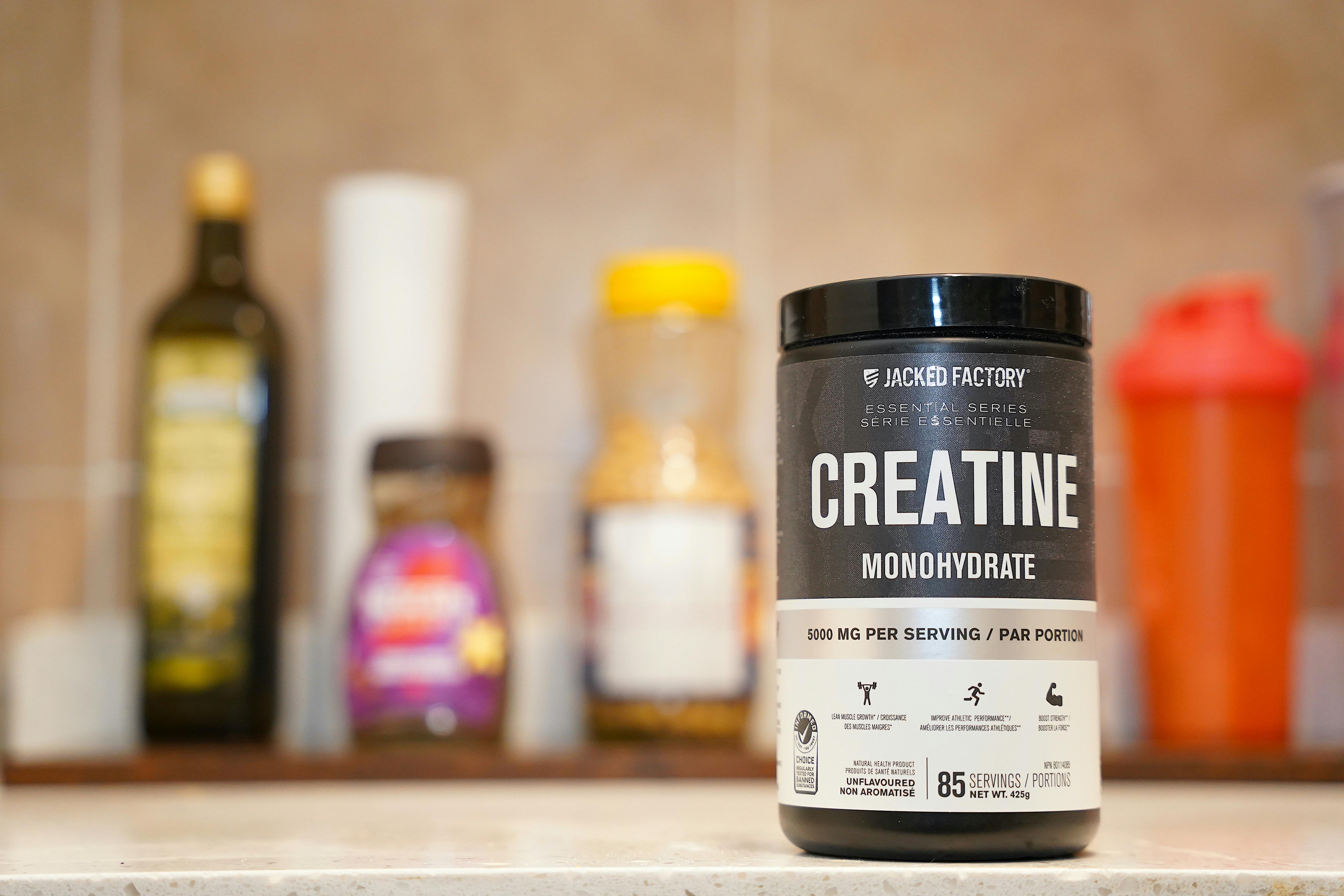
Creatine monohydrate is the form used in virtually every trial showing benefit. It is the reference standard. Creatine ethyl ester, creatine hydrochloride, buffered creatine, micronized creatine, and creatine nitrate have all been tested against monohydrate. None have demonstrated superior performance outcomes in independent, non-industry-funded trials.
Ethyl ester was shown in a 2011 Journal of the International Society of Sports Nutrition study to be less stable than monohydrate and to convert to the inactive byproduct creatinine more rapidly. Buffered creatine (Kre-Alkalyn) produced no significant difference in muscle creatine uptake or performance compared to monohydrate in head-to-head trials. Creatine hydrochloride was marketed as requiring a lower dose due to better solubility, but the solubility advantage does not translate to better muscle uptake or performance.
Monohydrate is also the cheapest form. A 500 g tub of micronized monohydrate costs roughly $15 to $25 and lasts 2 to 3 months at standard dosing. The patent-protected forms typically cost 3 to 10 times that amount per gram.
Dosing and safety
The traditional dosing protocol involves a loading phase of 20 g per day for 5 to 7 days, split into four 5 g doses, followed by a maintenance dose of 3 to 5 g per day. The loading phase saturates muscle creatine stores faster, but it is not required. Taking 3 to 5 g daily without loading achieves the same muscle saturation after roughly 3 to 4 weeks. The loading phase reliably causes water retention and weight gain of 1 to 2 kg, which some athletes find desirable and others do not.
Safety data is extensive. A 2021 review examining renal function in long-term creatine users found no evidence of kidney stress or damage at doses up to 30 g per day for up to 5 years in healthy individuals. The most common side effect is gastrointestinal discomfort, which is more frequent at doses above 10 g in a single bolus. Splitting the loading dose into four equal parts eliminates this for most people.
Creatine is not recommended for people with pre-existing kidney disease, not because it has been shown to cause harm in that population, but because it has not been studied in that population. The same precaution applies to any supplement that affects renal solute load.
The only near-universal side effect is a small increase in body weight from water retention in muscle. This is a performance benefit, not a health concern, but it can be mistaken for unwanted bloating.
Who should take it
The International Society of Sports Nutrition position stand recommends creatine for athletes engaged in high-intensity, repeated-bout sports. The evidence supports that recommendation. Creatine also shows promise for older adults maintaining muscle mass, vegetarians and vegans with low baseline stores, and people recovering from periods of immobilization or bed rest. The cognitive benefit for sleep-deprived or stressed individuals is an emerging area with preliminary but positive data.
Creatine is not necessary for health. The body synthesizes about 1 g per day endogenously and dietary sources (meat and fish) contribute roughly an additional gram. For sedentary people with adequate dietary intake, supplemental creatine is unlikely to provide any noticeable benefit beyond what the body already produces and consumes.
Rafael Costa
Strength coach and nutritionist covering protein science, creatine, recovery protocols, and body composition. Reports from Miami.